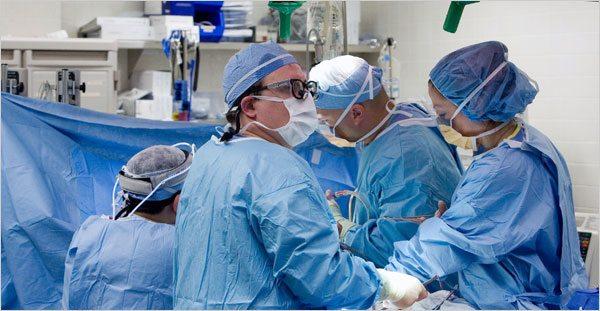

Have you ever been part of Code Blue (patient in full arrest) that went horribly wrong? Almost all docs have a horror story from either a real-world or (preferably) sim lab scenario where a resuscitation fell apart and ultimately led to catastrophe. What happened? If I'm wagering a bet on the question, I'd put my money on a breakdown in communication. And many studies would support the claim that miscommunication is a leading cause of medical errors.
In the world of aviation, mistakes also have catastrophic consequences. In the late 1970's a series of commercial airline crashes culminating in the United 173 Crash outside Portland, Oregon led mishap investigators to conclude that interactions between crew in the cockpit played a significant causal role. From this mishap, the National Transportation Safety Bureau (NTSB) recommended a revolutionary new type of training for all aircrew. Crew Resource Management (CRM) was born.

A quick look at what Crew Resource Management teaches pilots and other aircrew:
- Recognizing Conditions Leading to Error - I.D. the threat early and error is avoided.
- Effective Mission Planning - Plan as a team. Create a constructive environment.
- Common Communication Deficiencies & Skills to Overcome - Know the various psychologic, cultural, and environmental filters that degrade communication.
- Skill Set for Appropriate Crew Coordination - Build a team cross-check. Develop techniques to resolve conflict.
- Task Management - The importance of knowledge, prioritization, & managing task loads effectively.
- Situational Awareness - How to identify loss of S.A. in oneself and other crew members.
- Risk Management & Decision Making - What is the current risk to operations?
- The Debrief - Learning, avoiding future mistakes, and process improvement occur here.

A paper published in the New England Journal of Medicine found that in 10,740 patient admissions, the medical-error rate decreased by 23% from the pre-intervention period to the post-intervention period after standardized patient handoffs were incorporated into shift changes.