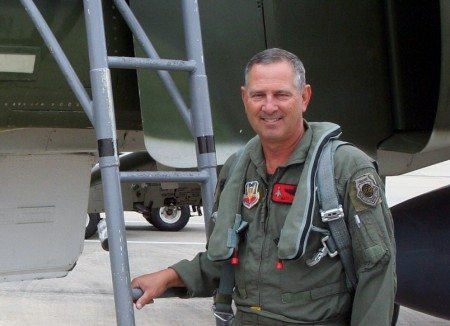

Guest post by fighter pilot and editor of Tally One, Rob Burgon
When was the last time you remember hearing about a U.S. fighter aircraft being lost in air-to-air combat? How about the last time one of our fighters was shot down in combat? I bet you'd really have to dig for the answer. Ok, how about this one: When was the last time you heard about one of our jets going down during a training mission? Unfortunately that is a pretty easy one to answer.

The US Armed Forces have lost a number of aircraft and aircrew in the 2014 training arena. A USAF F-15 crashed in England this past October. The most recent accident involved an F-16 flown out of Tyndall AFB in Florida and took the life of retired Lt Col and civilian USAF pilot, Matthew J. LaCourse.
Risks Associated with Air Combat Training (ACT)
The biggest risk to life and aircraft when it comes to air-to-air combat training is a mid-air collision. An ACT mission consists primarily of intercepts, typically initiated from beyond visual range (BVR) with the fighter and the target converging at some angle.
We call this aiming "collision antenna train angle", or CATA. As the name implies, if both you and the target do nothing during the CATA intercept, you will collide – so the end game portion of the intercept requires maneuvering. Add in potential task saturation and channelized attention from working sensors, talking on the radio, and trying to remember the ROE and you have a pretty good recipe for disaster.
The greatest risk for air-to-ground training is controlled flight into terrain (CFIT). CFIT accidents typically involve someone being heads down working a targeting pod while either maneuvering aggressively or experiencing spatial disorientation. Spatial disorientation is a huge player in night accidents.
Risk Mitigation Measures
Every effort is made to mitigate risk beginning with mission planning. During mission planning of a large force exercise (LFE), altitude deconfliction blocks are painstakingly carved out and assigned. Choke points are identified and plans are hatched to improve aircraft flow.
In the air, every player has the option to call "Knock It Off" if they feel safety of flight is, or is about to be compromised. When a "Knock It Off" is called, everyone acknowledges, ceases tactical maneuvering, and clears their flight path.
Will we ever be completely rid of training accidents? Probably not, but I believe training scenarios get safer every day as we learn from past mistakes.
By Tally One Chief Editor Rob Burgon (with minor edits by GFM).
Need an FAA Medical Exam?