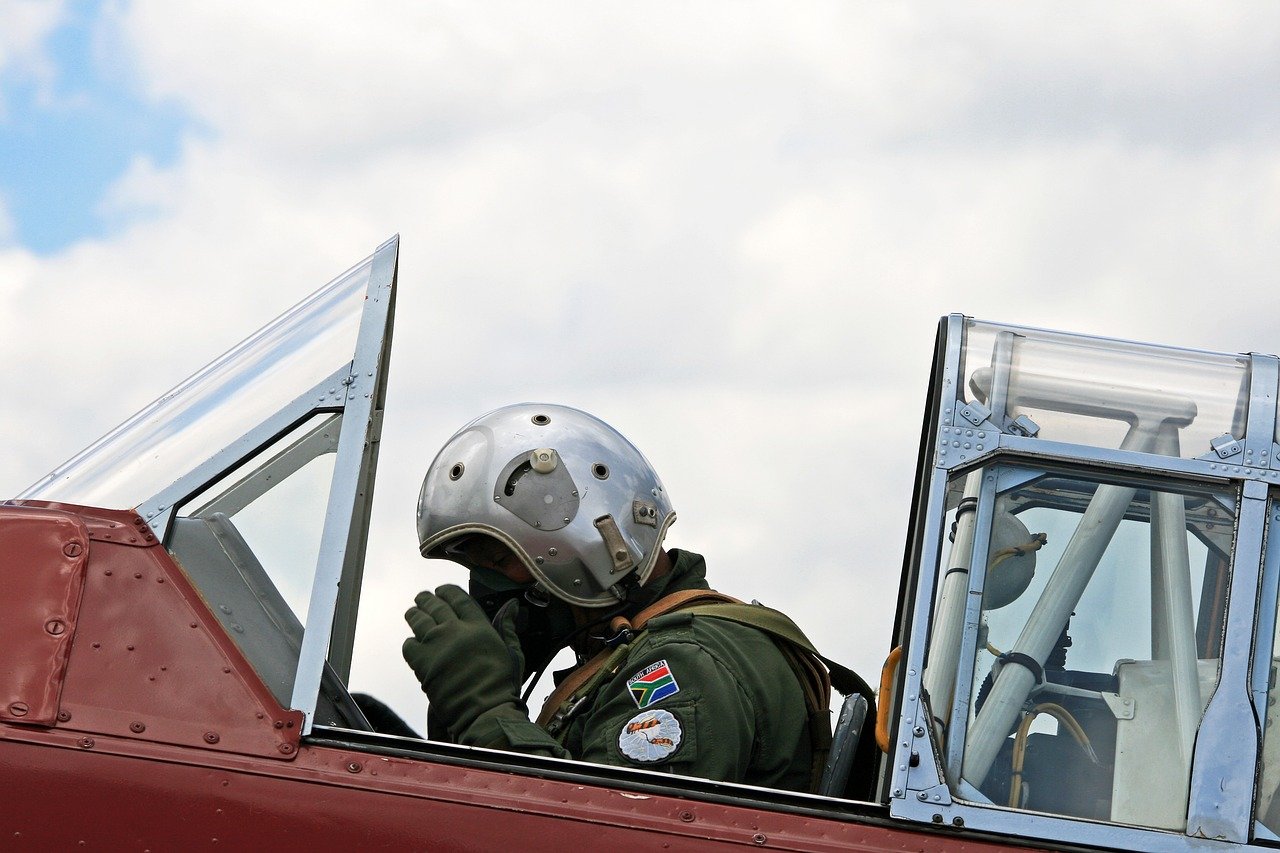
Understanding how night vision works is absolutely critical for every pilot, whether you're flying a Cessna 172 on a moonlit evening or strapping into an F-16 for a night combat sortie with night vision goggles (NVGs). As a flight surgeon who has logged hundreds of hours flying with NVGs in military aircraft, I can tell you that the human visual system was not designed for the nocturnal aviation environment — and the consequences of not understanding its limitations can be fatal.
THE PHYSIOLOGY OF NIGHT VISION
To understand night vision, you need to understand the two types of photoreceptor cells in the retina:
- Cones: Concentrated in the fovea (central retina), responsible for color vision and high visual acuity. Cones function best in photopic (well-lit) conditions and require relatively high light levels to activate.
- Rods: Distributed throughout the peripheral retina, responsible for low-light (scotopic) vision. Rods are approximately 1,000 times more sensitive to light than cones but cannot distinguish color and provide lower visual acuity.
Dark Adaptation
When transitioning from a bright to dark environment, the visual system undergoes dark adaptation. Cones adapt within about 5-7 minutes, but full rod adaptation — which provides maximum scotopic sensitivity — requires approximately 30-45 minutes. This is why the standard recommendation is to allow at least 30 minutes of dark adaptation before night flight.
The photochemical basis for this involves rhodopsin, the visual pigment in rod cells. Bright light bleaches rhodopsin, and regeneration takes time. A single flash of bright white light can destroy up to 30 minutes of dark adaptation. This is why cockpit lighting uses red or low-intensity white light — red wavelengths minimally affect rhodopsin.
NIGHT VISION LIMITATIONS IN AVIATION
The Night Blind Spot
Because rods are absent from the fovea, a central blind spot exists in scotopic conditions approximately 5-10 degrees in diameter. This means that looking directly at an object at night may cause it to disappear. Pilots are taught to use "off-center viewing" — looking 10-15 degrees away from an object to place its image on the rod-rich peripheral retina.
Visual Illusions at Night
Night flying introduces several dangerous visual illusions closely related to spatial disorientation:
- Autokinesis: A stationary light viewed against a featureless background appears to move, potentially causing a pilot to chase the "moving" light.
- False Horizon: Ground lights or stars can be mistaken for the actual horizon, leading to dangerous bank angles.
- Black Hole Approach: Landing over dark, featureless terrain (water, unlit areas) without a visual horizon creates the illusion of being higher than actual altitude, often resulting in dangerously low approaches.
NIGHT VISION GOGGLES (NVGs)
Night vision goggles amplify ambient light (moonlight, starlight) through image intensifier tubes, converting photons to electrons, amplifying the signal, and converting back to visible light on a phosphor screen. Modern aviator NVGs (AN/AVS-6 and AN/AVS-9) provide significant tactical advantage but introduce their own limitations:
- Reduced field of view: NVGs typically provide only 40 degrees FOV compared to the normal 200+ degrees, creating significant peripheral blind spots.
- Degraded depth perception: The monochromatic green image and reduced contrast make distance and terrain judgment challenging.
- Accommodation issues: The fixed focal distance of NVGs can cause eye strain and difficulty transitioning between goggle-aided and unaided vision.
PROTECTING YOUR NIGHT VISION
For civilian and military pilots alike, protecting night vision capability is essential:
- Allow adequate dark adaptation time (minimum 30 minutes)
- Use red or dim cockpit lighting
- Close or cover one eye if exposed to bright light to preserve adaptation in that eye
- Maintain good nutrition — Vitamin A deficiency impairs rod function
- Avoid smoking — carbon monoxide from cigarettes reduces night vision by up to 20% at altitude
- Be aware that certain medications can impair night vision
If you have concerns about your vision and how it affects your FAA medical certificate, including color vision deficiencies, our team specializes in helping pilots navigate these challenges. We also offer the online color vision screening tool as a preliminary resource.
Concerned about your vision and your medical certificate?