
I recently had a case in which I was able to combine the ADHD Fast Track process with the Anxiety, Depression, and Related Conditions Fast Track. Throughout this process, I actually learned some new things about the way these two protocols can be used in parallel — and this may be applicable to a lot of pilots out there who have both a distant history of ADHD and anxiety, depression, PTSD, OCD, or other mental health conditions.
Background: The ADHD Fast Track Pathway
When the ADHD Fast Track Pathway was first published in October 2024, I would defer anyone who had any other psychiatric diagnosis — including OCD, unspecified anxiety, or a variety of other conditions. Based on the way the pathway was described on the flow chart (see the official FAA ADHD Pathway Chart), it seemed clear that any additional psychiatric history would disqualify a pilot from using it.
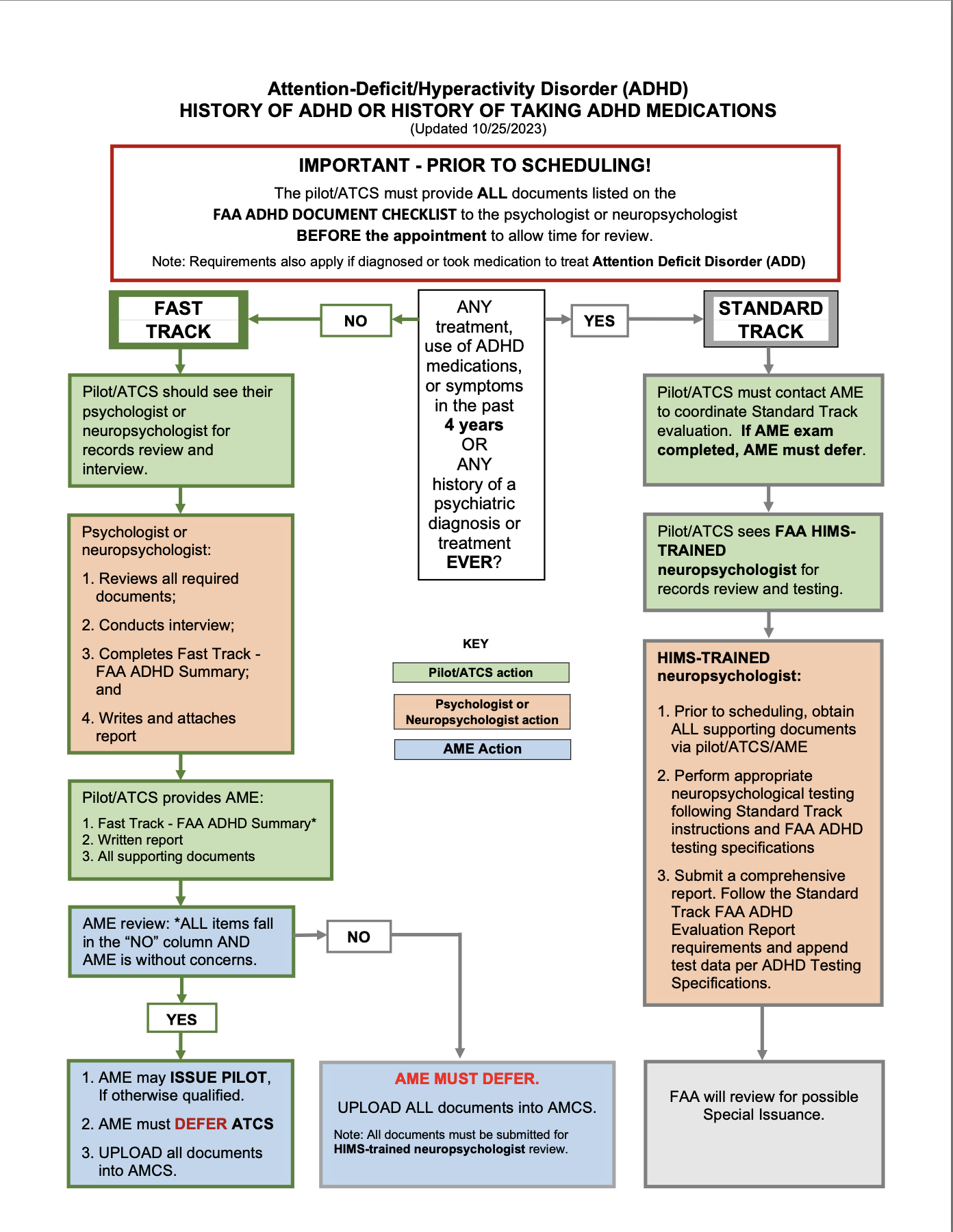
FAA ADHD Pathway Flow Chart — View official PDF
The Key Exception Most Pilots Don't Know About
But it was pointed out to me that the ADHD Disposition Table clearly states:
"NO other psychiatric condition(s) or diagnosis (current or historical).
Exception: Anxiety, Depression, and Related Conditions can use this row if the individual qualifies for the Anxiety, Depression, and Related Conditions Fast Track."
This is a critical detail. It means that as long as the other mental health condition is "fast-trackable" — specifically, not Major Depressive Disorder (MDD) or Persistent Dysthymia Disorder (PDD) with antidepressant use in the last two years — then the ADHD Fast Track can still be utilized alongside the Anxiety, Depression, and Related Conditions Fast Track.
Who Does This Apply To?
This combined pathway may be relevant for pilots who have:
- A distant history of ADHD (no medications or symptoms for 4 or more years)
- A history of a qualifying mental health condition such as anxiety, depression, PTSD, or OCD
- No use of antidepressant medications for 2 or more years
- Conditions that independently qualify for the Anxiety, Depression, and Related Conditions Fast Track
- No previous diagnosis of Major Depressive Disorder (MDD) or Persistent Dysthymia Disorder (PDD)
Why This Matters
I've been seeing more and more patients in this exact scenario reaching out for consultations. The ability to combine these two pathways can be a game-changer. Rather than being deferred and waiting months — or even years — for certification, pilots who qualify for both fast tracks may be able to obtain their medical certificate significantly faster.
My Recommendation
If you feel like you possibly fit into this category, I strongly recommend that you consult with your AME before scheduling an exam to see if they will work with you to utilize the Fast Track pathways. A knowledgeable HIMS AME can evaluate your specific history and determine whether the combined approach is an option for your case.
Taking this step before your appointment could potentially save you months of waiting and thousands of dollars in unnecessary evaluations. The fast track pathways exist for a reason — don't leave time and money on the table by not exploring every option available to you.
Ready to Discuss Your Case?
Every pilot's medical history is unique. If you have a history of ADHD combined with anxiety, depression, or related conditions, our team at Go Flight Medicine can evaluate your specific situation and help determine the fastest pathway to certification.
Book a ConsultationFree initial case review — we'll let you know your options before you commit.