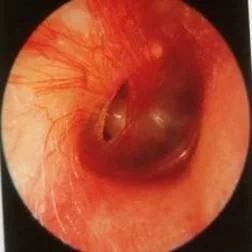

Most aviators learn early in their career that flying with a simple upper respiratory infection or seasonal allergies can be painful. Gases in the sinuses and middle ear expand in accordance with Boyles Law as altitude increases and pressure decreases.
Usually on ascent, the Eustachian Tubes open spontaneously allowing expanding gases to travel down into the posterior pharynx and equilibrate pressures. During descent, however, the Eustachian Tube will often not open spontaneously and the middle ear, sinuses, or other closed cavities will experience a vacuum like phenomenon as the gas contracts.
In these cases, it is important for the aviator (much like the SCUBA diver) to be well acquainted with several techniques to equilibrate the external pressure with the middle ears. This is often called 'Clearing the Ears'.
TECHNIQUES TO CLEAR YOUR EARS
- VALSALVA MANEUVER: To perform this maneuver, you pinch your nose and exhale against a closed glottis, transmitting air into the eustachian tube and middle ear.
- TOYNBEE MANEUVER: To perform this maneuver, you pinch your nose and try to swallow. This results in a decreased nasopharyngeal pressure against the middle ear and Eustachian Tube, which will open in response.
- FRENZEL MANEUVER: To perform this maneuver, you thrust your jaw forward. This slight shift in your natural anatomy will cause the Eustachian Tube to straighten and open.
- OTHER TECHNIQUES: Some people can voluntarily contract the tensor palati and the levator palati. Yawning, drinking water, chewing gum, or blowing up a balloon with your nose are other techniques.
It is also critical that aircrew and medical providers involved in aeromedical evacuations are able to educate patients and passengers on these techniques.
The congestion, increased mucous production, and inflammation of the upper airways that accompanies colds or allergies will significantly obstruct one's ability to correctly perform any of these maneuvers. This is why pilots and other aircrew with symptomatic colds and allergic rhinosinusitis are at least temporarily not fit to fly (DNIF!).